At the turn of the century, French color printmaking extended to all aspects of life, and art forms that were used widely in all printed communications.
Announcements, menus, book covers, theater programs, sheet music and invitations were all indebted to color lithography, etching and woodcut printing as each was enhanced by visual imagery.
Not just a title format, but an image was what brought an immediate visual connections with the viewer. This was not possible with only a type-faced title.
The examples I have chosen each show the artists representation of the object they were illustrating – making a strong connection to it.
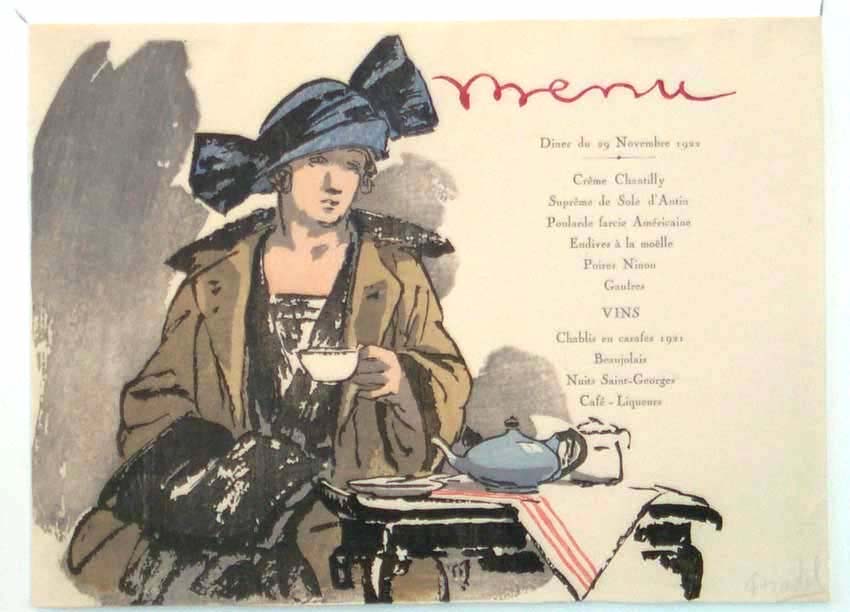
Dinner menu featuring a portrait of the artist’s wife at a table with a cup and pot of tea.
This color woodcut menu for the artist’s wife’s dinner party, portrays Madame Chadel in a quiet intimate setting with very visually unobtrusive dinner menu in the background.
The portrait almost invites you to guess what she is thinking. She is obviously outdoors, at café, for she is dressed in a coat and hat, having tea.
A great effort was made to create an image in the color woodcut menu, for such a small edition for dinner guests. Most woodcuts were created in small editions, as the color woodcut technique is a very time consuming process – as it usually entails the cutting and printing of one woodblock for each color.
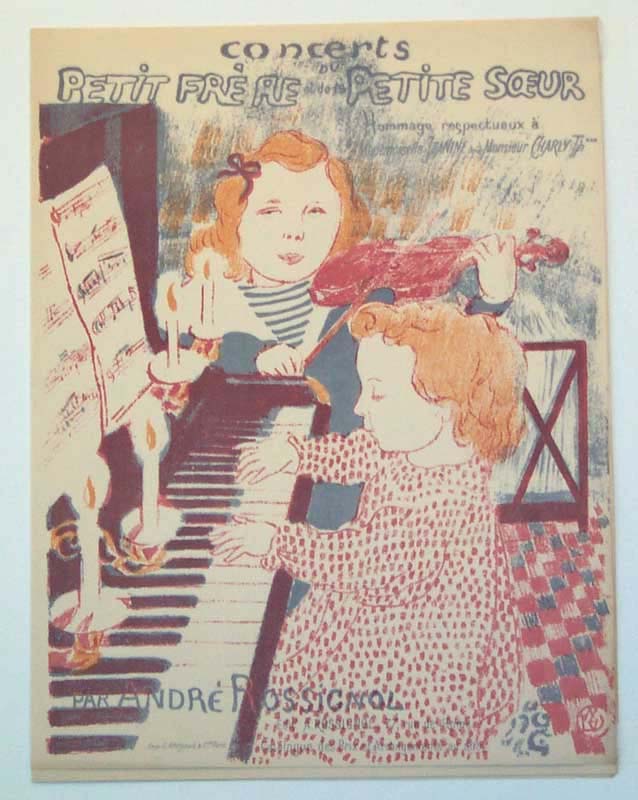
Concerts du Petit Frère et de la Petit Soeur (Concerts by little brother and sister)
Music for piano with image of the artist’s children playing the piano.
Maurice Denis was a major French painter and decorative artist. He is associated
with the Nabis (the Hebrew word for prophet), a group of French artists in the
late 1880s who played a large part in the transition from Impressionism to
Symbolism and early Modernism.
He was also a print maker, making a number of color lithographs of quiet intimate scenes. Concerts by “little brother and sister” is one such example using images of his children at the piano for the cover of sheet music. His major portfolio of prints, titled Amour Suite (1899), contains 13 prints all of which convey quietude and intimacy.
His strong religious beliefs are often reflected in many of his other prints.
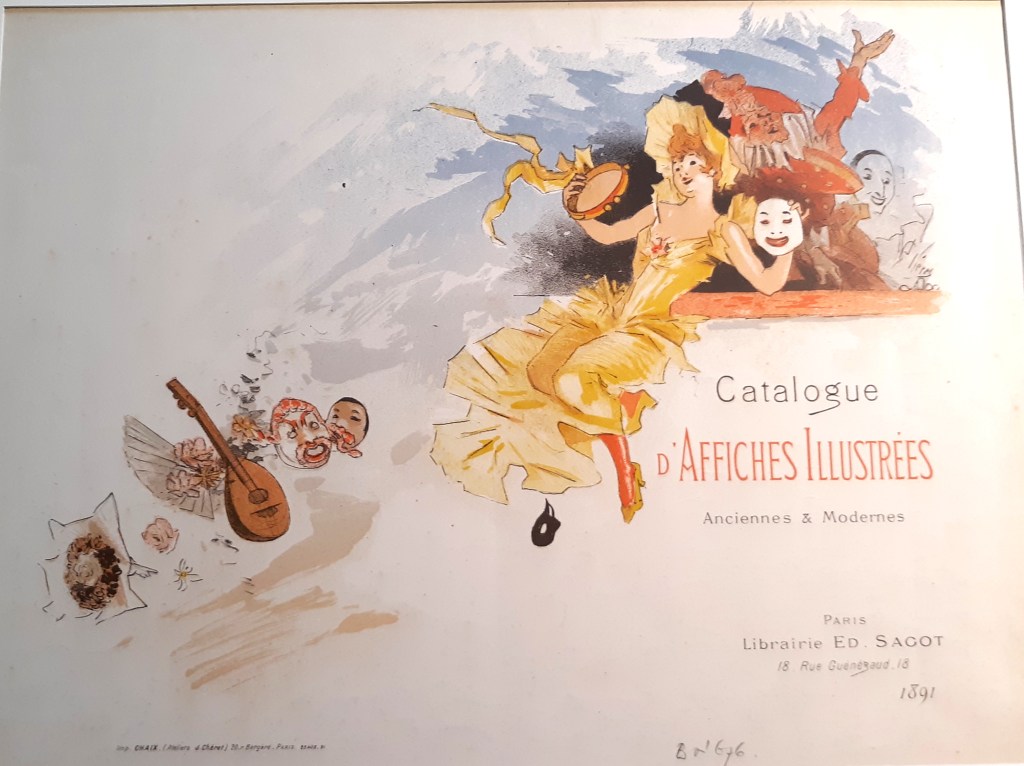
Catalog, single sheet – front and back, for d’Affiches illustrées: ancient & modernes, published by Ed. Sagot Librarie.
Cheret is best known for his color lithographic posters of the Belle Epoque (1885-1900), most often featuring dancers, singers and performers of Parisian nightlife and its cabarets, music halls and theaters.
He also made posters for the Follies Bergère, Theatre de l’Opera among others. In addition he made commercial posters for cigarettes, wines and concerts.
Note: the Milwaukee Museum of Art recently opened the first U.S. exhibition of Cheret’s posters featuring over 100 examples of his art – Always new: the posters of Jules Cheret.

Galerie Ed. Sagot, announcement and advertisement for the well-known Paris art dealer, Edmond Sagot, depicting a young lady perusing prints with a gallery attendant looking on.
Galerie Ed. (Edmond) Sagot opened in 1881 as an artist library and in 1884 evolved into a commercial gallery selling prints and drawings.
In 1891 it published the first catalog on posters. Artists who produced posters for Sagot include: Paul Cesar Hélleu, Alexandre Lunois, Jules Chéret – to name a few.
French etcher and lithographer of the Belle Epoque, Lunois produced many prints for art publications. A major printmaker, his works are in many museum collections both here and in Europe.
This image, which portrays a young lady sitting at a print rack, is the perfect image for this announcement.
For further information on French prints and printmaking, take a look at the following online exhibit at the Van Gogh Museum in Amsterdam……
https://www.vangoghmuseum.nl/en/stories/prints-in-paris#0
 Andrew Terry Keats - Fine Art