The term Japonisme was first used in 1872. It is used to designate the influence of Japanese color woodcuts on French printmaking.
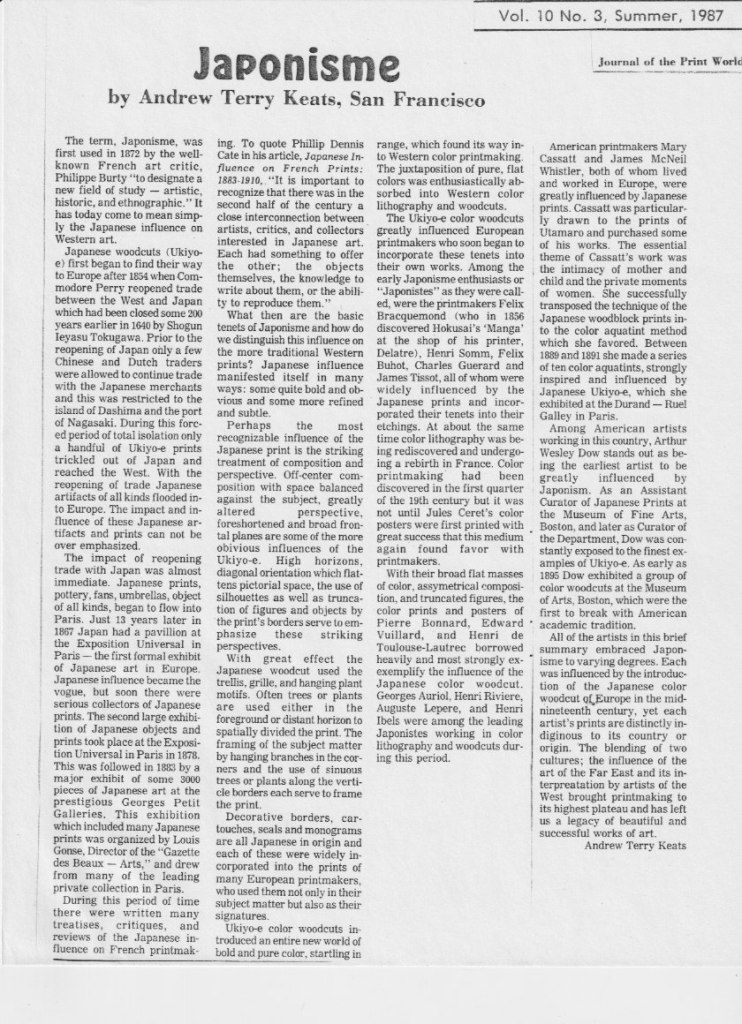
The article “Japonisme” was originally published in The Journal of the Print World in the summer of 1987. Since then there have been many museum exhibitions and books published on the subject.
Each of the prints illustrated below show the many different aspects of Japanese influence on French and European prints.
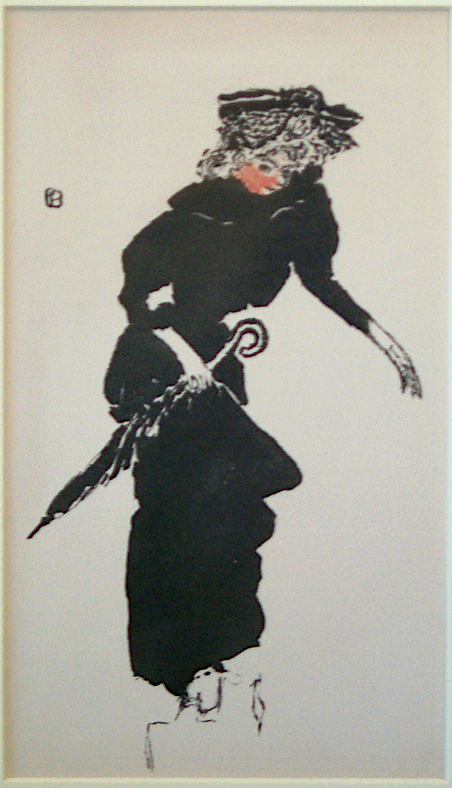
Pierre Bonnard. Femme au Parapluie, Lithograph in two colors, 1894.
One of the two images of the same subject, Bonnard eliminated outlines in prints and used color masses which create a floating image. This is best referenced as follows by Clive Bell in the exhibition catalog “Bonnard and his Environment.”
“Bonnard’s pictures as a rule grow not as trees; they float as water lilies.”
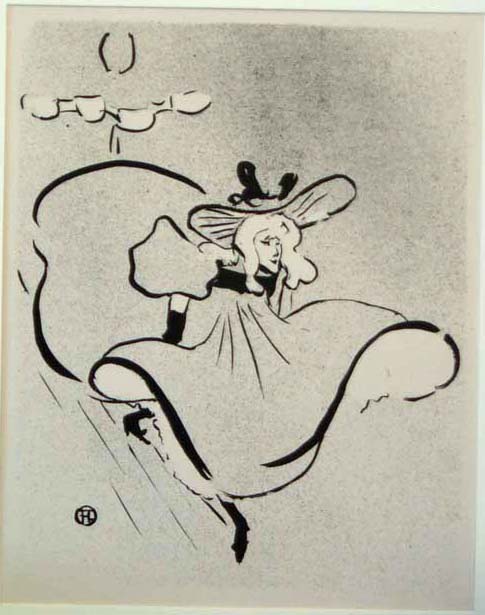
Henri Toulouse-Lautrec. Jane Avril, Lithograph, 1893.
In this print the very strong influence of Japanese ink drawing can be seen. The movement of the dancer is emphasized by sweeping calligraphic strokes.
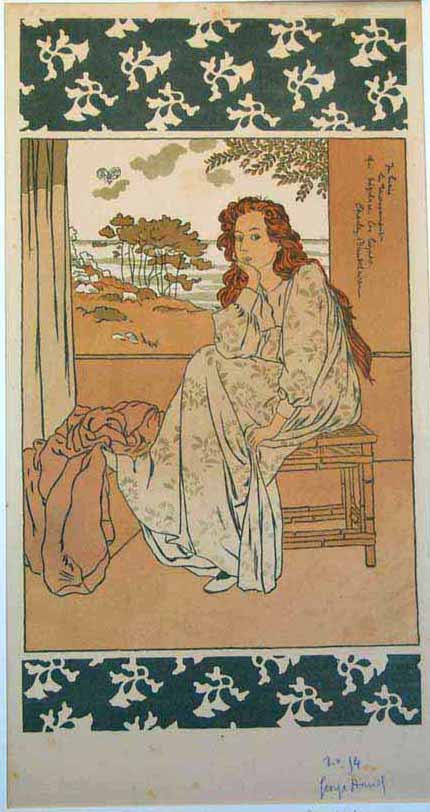
Georges Auriol. Jeune femme assise, Lithograph in colors, 1896.
The decorative band in the form of flowers at the top and bottom of the image serve to frame the print. The quote from Charles Baudelaire is positioned in the image similarly to Japanese vertical signatures.
Henri-Jacques Evenepoel. Au Square, Lithograph in colors, 1897.
The cropping of the figures and diagonal composition of the image emphasize movement. as is often found in Japanese theatrical prints.

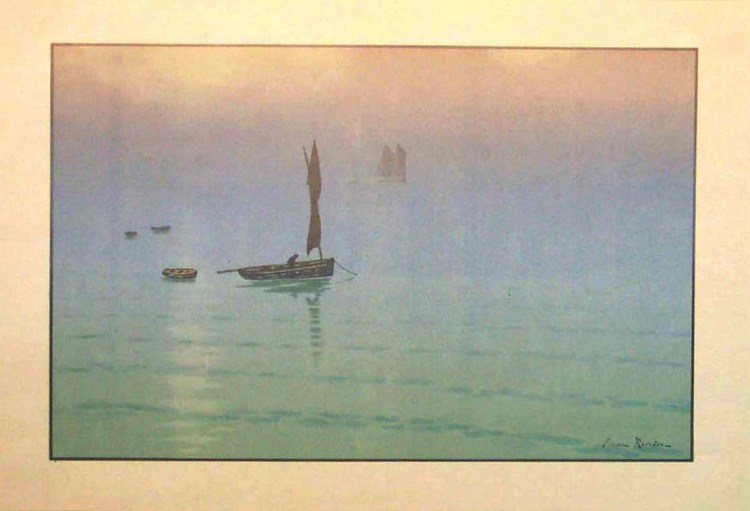
Henri Rivièrre. Brume en mer, Lithograph in colors, c. 1915.
The broad foreground plain creates a flattened pictorial space as seen in many Japanese landscape prints.
Jacques Villon. Au Café de la Place Blanche, Aquatint in color, 1907.
The truncated figures placed off center in the composition – with space balanced against the subject – seem to emphasize perspective.

Japonisme , by Andrew Terry Keats
The Japanese Influence on Western Art
Journal of the Print World, Summer, 1987.
 Andrew Terry Keats - Fine Art